Learn how to pay real property tax in the Philippines, including annual and quarterly deadlines,required documents, online payment options, and late-payment penalties.
Date Posted: October 26, 2026
Owning a property in the Philippines comes with responsibilities, and one of the most important is paying Real Property Tax (RPT), commonly known as "AMILYAR." Whether you own a house, condominium, or parcel of land, understanding your real property tax obligations can help you avoid penalties and keep your property records up to date.
If you are a property owner in the Philippines, this guide covers the RPT payment deadlines, required documents, payment procedures, and possible penalties for late payment.
What Is Real Property Tax (RPT)?
Real Property Tax (RPT) is a tax imposed on real properties, such as land, buildings, and other taxable improvements. It is administered by the local government unit (LGU) where the property is located.
Property owners should check with their respective LGU for the applicable tax assessment, payment procedures, and local requirements.
When Is the Deadline for Real Property Tax Payment?
Property owners may pay their RPT in full or through quarterly installments, subject to the applicable LGU's payment rules.
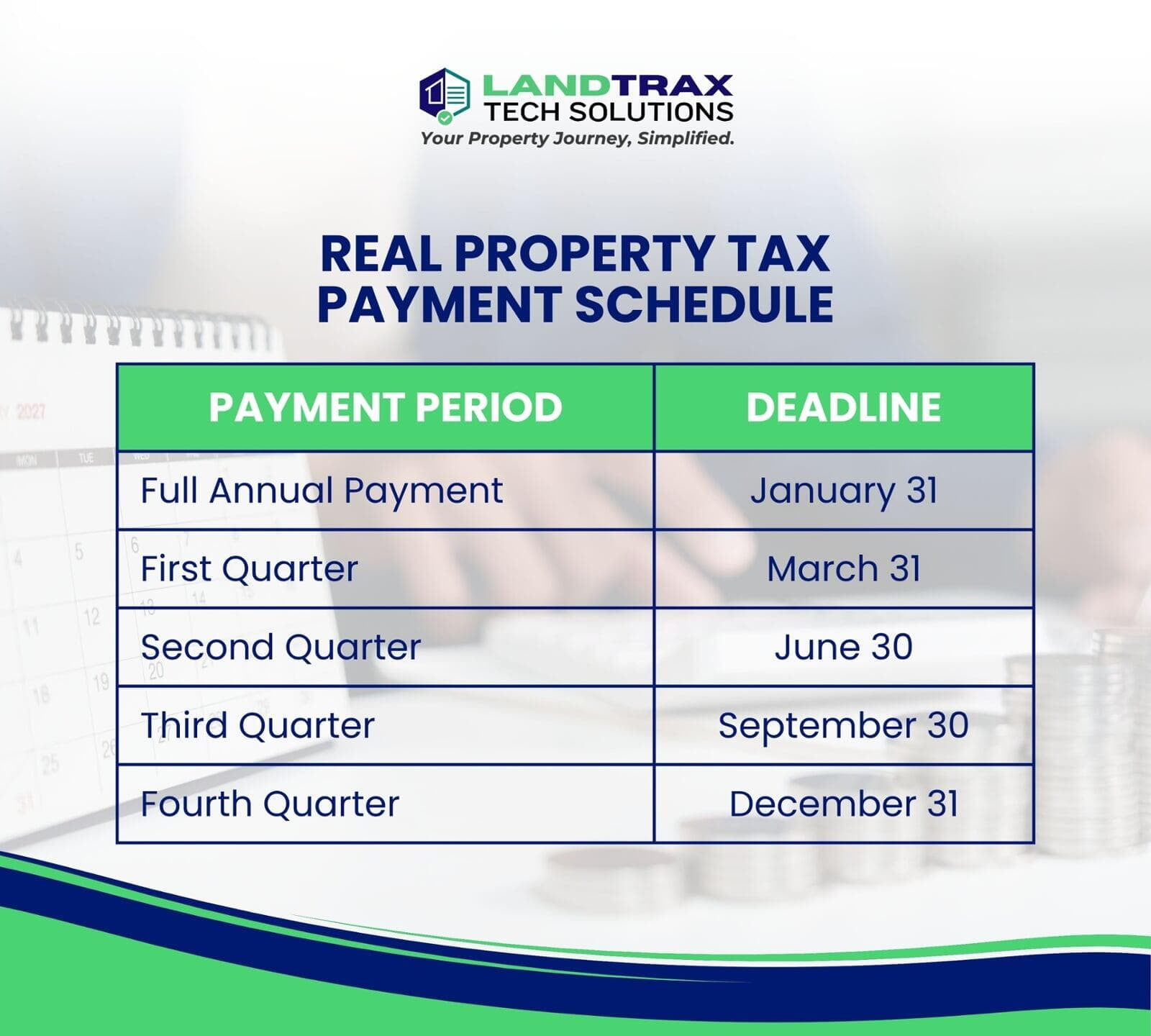
Property owners may pay their RPT in full or through quarterly installments, subject to the applicable LGU's payment rules.
Tip for property owners: Mark your RPT payment deadlines on your calendar to avoid missing a due date. Some LGUs may offer discounts for advance or early payment, so check with your local treasurer's office for applicable discounts and deadlines.
What Documents Are Needed to Pay Real Property Tax?
Before visiting your LGU's payment office, prepare the documents required for your property tax payment.
Before visiting your LGU's payment office, prepare the documents required for your property tax payment.
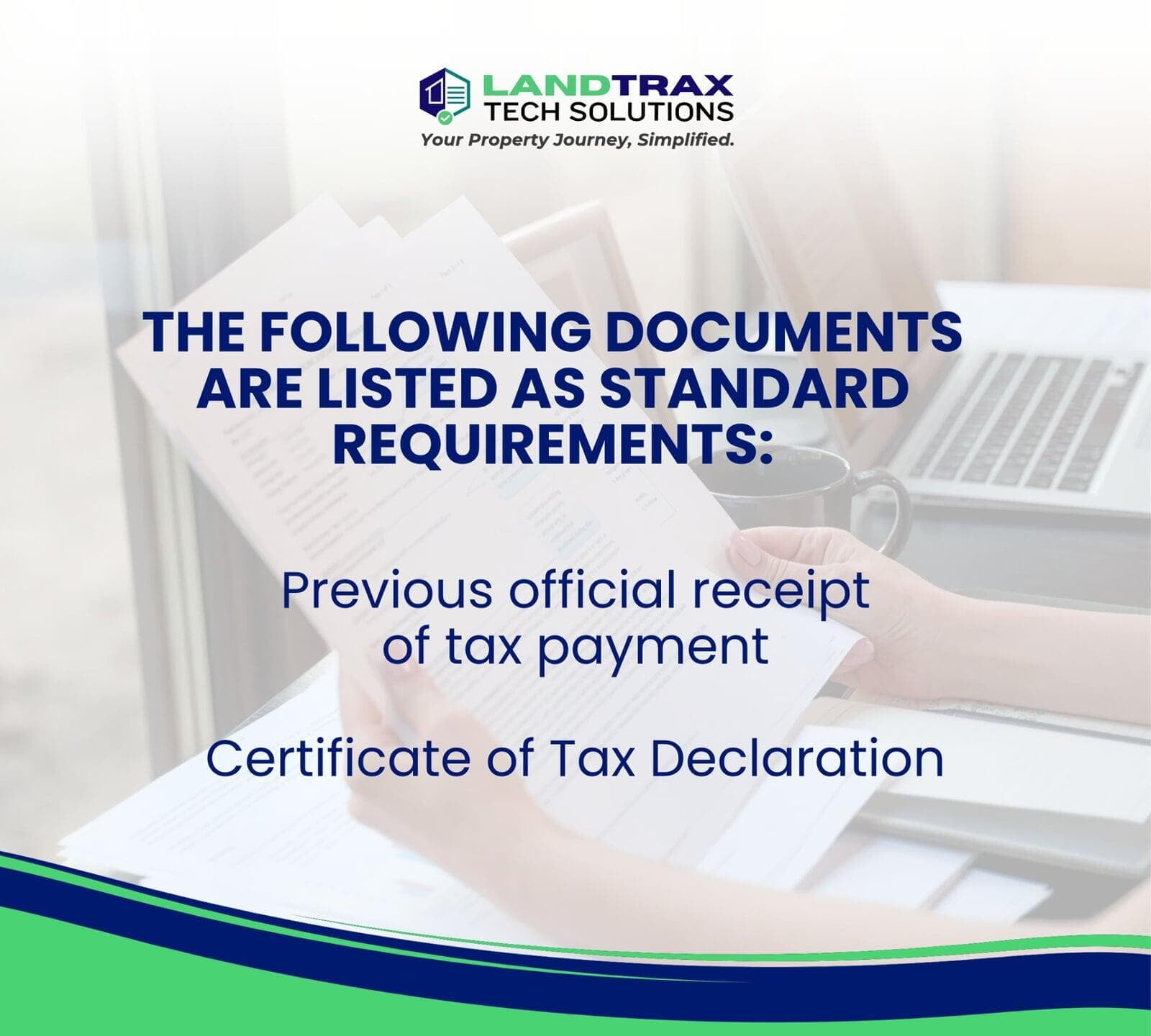
Standard Requirements
Depending on the city or municipality, you may also need to present one or more of the following:
- Transfer Certificate of Title (TCT) or Condominium Certificate of Title (CCT)
- Valid identification (ID)
- Copy of the Real Property Tax record
Depending on the city or municipality, you may also need to present one or more of the following:
- Transfer Certificate of Title (TCT) or Condominium Certificate of Title (CCT)
- Valid identification (ID)
- Copy of the Real Property Tax record
How to Pay Real Property Tax in the Philippines
Property owners can generally pay their RPT in person or through an online payment facility, depending on the services available in their respective LGU.
When paying at the local government office or a designated payment center, follow these steps:
Step 1: Prepare the required documents.
Bring your previous official receipt, Certificate Tax Declaration , and any additional documents required by your LGU.
Step 2: Visit the LGU's Treasurer’s Office or designated payment center.
Proceed to LGU’s Treasurer’s Office to have your property records checked and assessed.
Step 2: Visit the LGU's Treasurer’s Office or designated payment center.
Proceed to LGU’s Treasurer’s Office to have your property records checked and assessed.
Step 3: Have your property tax assessed.
Submit the necessary documents and wait for the assessment of the amount payable.
Step 3: Have your property tax assessed.
Submit the necessary documents and wait for the assessment of the amount payable.
Step 4: Proceed to the billing section and pay.
Once the amount due has been determined, proceed to the designated billing or payment counter.
Step 4: Proceed to the billing section and pay.
Once the amount due has been determined, proceed to the designated billing or payment counter.
Step 5: Secure your official receipt.
Keep your official receipt as proof of payment. It may also be needed for future transactions involving your property.
Step 5: Secure your official receipt.
Keep your official receipt as proof of payment. It may also be needed for future transactions involving your property.
What Happens If You Pay Real Property Tax Late?
Failure to pay RPT on time may result in additional charges on the unpaid tax.
Under Section 255 of the Local Government Code, as cited in the provided reference, unpaid real property tax is subject to interest of 2% per month, or a fraction thereof, until the amount due is fully paid. The total interest is capped at 36 months.
This means that delaying payment can increase the amount you eventually need to settle. The reference also notes that administrative fines may apply, depending on the applicable rules.
If you have missed a payment deadline, contact your local treasurer's office to determine your outstanding balance, applicable interest, and the steps needed to settle your account.
Are There Exemptions From Real Property Tax?
Certain properties may qualify for exemption from RPT under applicable laws and subject to specific conditions.
The reference document identifies the following categories:
- Properties owned by the government or any of its political subdivisions.
- Properties owned by charitable institutions, churches, and qualifying nonprofit cooperatives and used exclusively for religious, charitable, or educational purposes.
- Properties actually, directly, and exclusively used for educational, charitable, or religious purposes, provided the owner meets the applicable non-stock and nonprofit requirements.
- Property owned by a person who is totally or partially disabled, provided it is used exclusively for that person's benefit and not for profit.
Are there discounts for paying RPT early?
Some LGUs may offer discounts for advance or early payment. The availability, rate, and qualifying deadlines depend on the applicable local rules. Check with your LGU for the current schedule.
Some LGUs may offer discounts for advance or early payment. The availability, rate, and qualifying deadlines depend on the applicable local rules. Check with your LGU for the current schedule.
Keep Your Property Records in Order With LandTrax
Paying real property tax on time is an important part of managing your property responsibilities. By understanding the payment schedule, preparing the required documents, and checking your LGU's procedures, you can make the process more manageable.
For property owners who need assistance with property documentation and registration, LandTrax Tech Solutions helps simplify property-related processes so you can navigate your property transactions with greater confidence.
Visit www.landtrax.ph to learn more about our Real Property Tax Payment services.